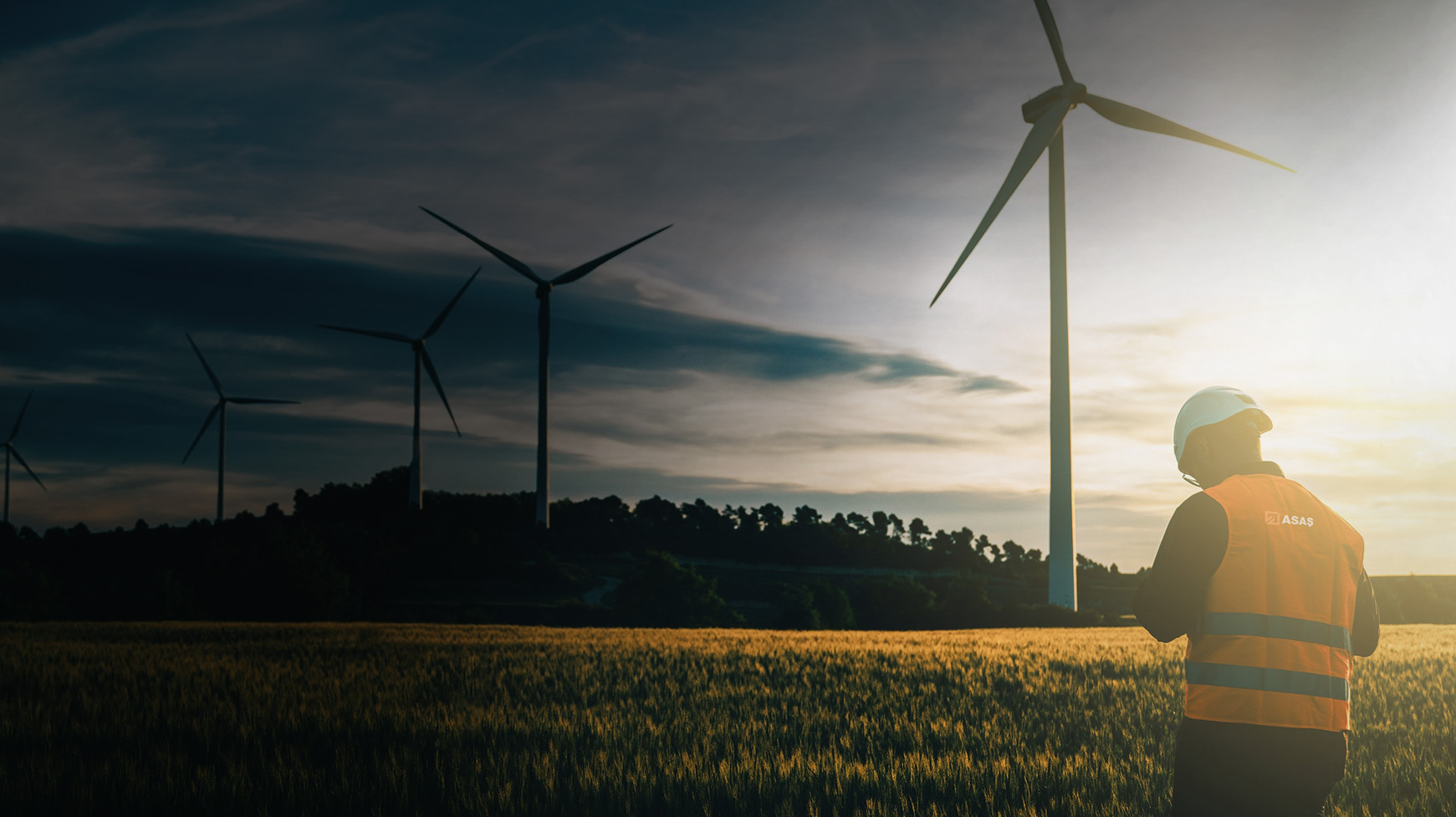
We address our understanding of sustainability under three main pillars established based on our sustainability perspective. Through our sustainability approach, which includes the comprehensive roadmap we have defined to achieve our sustainability goals, we aim to create value for all our stakeholders.
| SUSTAINABILITY APPROACH | HOW DO WE MANAGE IT? | ||
 |
Responsible Business Approach | In addition to our own operations, we adopt an inclusive approach that considers the practices of all our stakeholders. We support our stakeholders in adapting to global trends and strive to establish a fair, equitable, and transparent business culture. | |
 |
Human-Centered Business Approach |
We believe that our employees are the fundamental element of our sustainable growth. We provide a safe, healthy, and well-being-oriented working environment while supporting local development through projects that contribute to the advancement of society. |
|
 |
Environmentally Respectful Business Approach |
In line with our environmental responsibilities, we develop sustainable practices and produce innovative solutions. While reducing our environmental impact, we attach great importance to compliance with international standards. |
| PRIORITY ISSUE | IMPORTANCE FOR ASAŞ | SUSTAINABLE DEVELOPMENT LINK | ||
| Responsible Supply Chain Management | We monitor and supervise the use of natural resources throughout our supply chain and take actions to reduce the environmental impacts arising from raw material procurement and product distribution processes. In addition, we reflect our social responsibility across all our operations by prioritizing respect for human rights, ethical production, and fair working conditions. |  |
||
| R&D and Innovation | We develop innovative solutions that enhance efficiency in operational processes, products, and production infrastructure, reduce environmental impacts, and improve manufacturing techniques. Through R&D collaborations and projects, we create new products and processes while supporting continuous improvement. |  |
||
| Water Management | We manage water use effectively throughout our operations and value chain, taking basin-based impacts into consideration while developing sustainable practices in wastewater management and circular water use. |  |
||
| Product Quality and Safety | We develop our products in full compliance with quality standards and safety requirements — including chemical safety — during both the design and production stages. | |
||
| Customer Satisfaction | We focus on achieving high customer satisfaction by meeting the needs and expectations of our customers. |  |
||
| Biodiversity and Land Use | We prioritize the protection and restoration of biodiversity, aiming to minimize our environmental impacts by using natural resources sustainably within our areas of operation. |  |
||
| Employee Development and Well-being | We enhance efficiency by advancing digital technologies, strengthen our processes through automation investments, and implement robust cybersecurity measures across all our operations. |  |
||
| Social Impact | We develop projects that address the needs of communities and contribute to social and economic development by working collaboratively with local communities. |  |
||
| Equality, Diversity, and Inclusion | We aim to prevent discrimination and ensure equal opportunities by respecting all forms of diversity. We value creating a fair, equal, and inclusive environment for everyone in the workplace and society. |  |
||
| Corporate Governance | We build a strong, sustainable, and effective organizational structure based on the principles of fairness, transparency, accountability, and responsibility in our corporate governance approach. | |
||
| Digitalization and Information Security | It includes the development of digital technologies, investment in automation to increase efficiency, and the implementation of cybersecurity measures in business processes. | |
||
| Emission Management and Climate Crisis | It covers the management of greenhouse gas emissions released into the atmosphere throughout operational processes, as well as other non-greenhouse gas air emissions, and the evaluation of opportunities to reduce these emissions. It also includes the management of air pollution caused by these emissions and the activities carried out to monitor and protect air quality. |  |
||
| Waste Management and Circularity | It includes waste management processes (including hazardous, toxic, and chemical waste), reducing waste at its source, evaluating recycling and reuse opportunities, and ensuring the safe disposal of waste. Circularity, on the other hand, enables products to be reused through recovery and recycling methods at the end of their life cycle, preventing them from becoming waste. Aluminum has the characteristic of being recyclable, and the use of secondary aluminum contributes to the circular economy by re-evaluating resources as part of this process. |  |
||
| Occupational Health and Safety | It includes compliance with occupational health and safety standards, measures aimed at protecting the health and safety of employees in the workplace, and practices implemented to prevent workplace accidents and reduce occupational diseases. | |
||
| Energy Management | It covers the processes related to making energy consumption more environmentally and economically efficient, reducing the impacts of climate change, and the company’s effective use of energy resources through alternative energy sources such as solar energy. |  |
||
| Risk Management and Compliance |
It covers the processes of identifying, analyzing, prioritizing, and managing potential risks, as well as ensuring the company’s full compliance with legal regulations and environmental and social standards. |
|